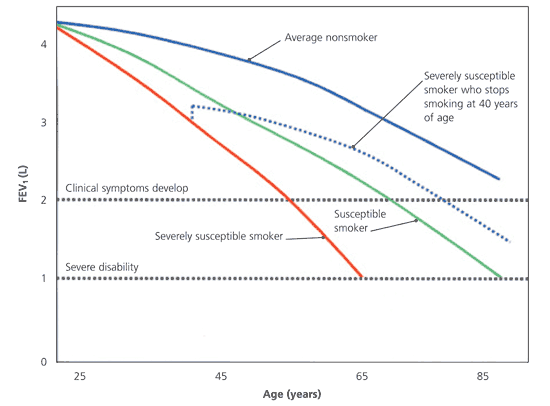
The goals of drug therapy for chronic obstructive pulmonary disease (COPD) are to reduce symptoms such as dyspnea, improve exercise tolerance and quality of life, and decrease complications of the disease such as acute exacerbations. Other guidelines for treatment of this condition have been published or updated in recent years.
1,2
SMOKING CESSATION — The primary strategy for preventing and minimizing the risk of COPD is to help patients stop smoking. Cigarette smoking causes 85% of all COPD cases. Smoking cessation offers health benefits at all stages of the disease and can slow the decline of lung function. Counseling and pharmacotherapy can help patients stop smoking. Effective medications include varenicline
(Chantix), nicotine replacement therapies and bupropion (
Zyban, and others).
3 Varenicline offers a unique mechanism of action as a partial nicotinic receptor agonist, but the current labeling includes precautions regarding possible neuropsychiatric side effects.
4 Combinations of smoking cessation therapies may offer additional benefit.
5
 INHALATION DEVICES
 — Guidelines are available for choosing among aerosol delivery devices.
6 Inhaled drugs are available in the US mainly in pressurized metered-dose inhalers (MDIs), which require a propellant, and dry powder inhalers (DPIs), which do not. Spacers used with MDIs may improve drug delivery, decrease mouth deposition, and require less hand-breath coordination. Nebulizers may be easier to use for some patients, such as the elderly, but more time is required to administer the drug with a nebulizer, and the device, which is usually not portable, requires greater care in cleaning.
7
SHORT-ACTING BRONCHODILATORS — For patients with intermittent symptoms, therapy with an inhaled short-acting bronchodilator is recommended for acute relief. Typically, these patients have mild airflow obstruction and symptoms are usually associated with exertion. Short-acting agents, which include inhaled
beta2-agonists such as albuterol and the
anticholinergic ipratropium, can relieve symptoms and improve exercise tolerance. Short-acting beta
2-agonists have a more rapid onset (<5 minutes) than ipratropium (15 minutes). With chronic use, short-acting beta
2-agonists have a duration of action of less than 4 hours, while ipratropium may continue to act for 6 hours (MDI) or as long as 8 hours (nebulized). There is no convincing evidence that any one of the inhaled short-acting beta
2-agonists is more effective than any other.
 Combination Therapy
 – Combining a beta
2-agonist with ipratropium has an additive effect. The combination of ipratropium/albuterol has been more effective than either drug alone and is available in a single inhaler.
Adverse Effects –
Beta2-agonists can cause tachycardia, skeletal muscle tremors and cramping, headache, palpitations, prolongation of the QT interval, insomnia, hypokalemia and increases in serum glucose. They require caution in patients with cardiovascular disease; unstable angina and myocardial infarction have been reported. Tolerance to these effects occurs with chronic therapy.
Ipratropium is a quaternary ammonium anticholinergic agent with limited systemic absorption. The most common adverse effect is dry mouth. Pharyngeal irritation, urinary retention and increases in intraocular pressure may occur. Anticholinergics should be used with caution in patients with glaucoma and in those with symptomatic prostatic hypertrophy or bladder neck obstruction.
LONG-ACTING BRONCHODILATORS — For patients with evidence of significant airflow obstruction and chronic symptoms, regular treatment with a long-acting bronchodilator is recommended. Choices include an inhaled long-acting beta
2-agonist or an anticholinergic agent.
 Long-acting beta2-agonists
 are intended to provide sustained bronchodilation for at least 12 hours. They have been shown to improve lung function and quality of life and to lower exacerbation rates in patients with COPD.
7
All long-acting beta
2-agonist products in the US include a boxed warning about an increased risk of asthma-related deaths; there is no evidence to date that patients with COPD are at risk. The adverse effects of long-acting beta
2-agonists are similar to those of the short-acting agents. Tolerance to the therapeutic effects of long-acting beta
2-agonists can occur with continued use.
Tiotropium is the only long-acting anticholinergic agent available in the US. Its long duration of action allows once-daily dosing, and there is no evidence of tolerance to its therapeutic benefits. The UPLIFT trial enrolled 5993 patients with COPD and randomized them to either tiotropium or placebo, in addition to their usual medications, for 4 years. Spirometry, quality-of-life scores, and exacerbation and hospitalization rates all improved compared to placebo in tiotropium-treated patients, but treatment did not reduce the rate of decline in forced expiratory volume in one second (FEV
1) during the study period.
8,9 Tiotropium is generally well tolerated and appears to be safe.
10 Adverse effects are similar to those of ipratropium.
11
Combination Therapy – When patients are not adequately controlled with a single long-acting bronchodilator, combining tiotropium with a long-acting beta
2-agonist may be helpful.
12
THEOPHYLLINE — Slow-release theophylline can be used as an oral alternative or in addition to inhaled bronchodilators (see Table 4). Its primary mechanism of action is bronchodilation. Because of significant inter- and intra-patient variability in theophylline clearance, dosing requirements vary. The drug has a narrow therapeutic index; monitoring is warranted periodically to maintain serum concentrations between 5 and 12 mcg/mL for treatment of COPD.
 Adverse Effects
 – At theophylline serum concentrations higher than 12-15 mcg/mL, nausea, nervousness, headache and insomnia occur with increasing frequency in patients with COPD. Vomiting, hypokalemia, hyperglycemia, tachycardia, cardiac arrhythmias, tremors, neuromuscular irritability and seizures can also occur at higher serum concentrations. Theophylline is metabolized in the liver, primarily by CYP1A2 and CYP3A4. Any drug that is an inhibitor or inducer of these enzymes can affect theophylline metabolism.
13 Clearance of theophylline is reduced in the elderly and in patients with liver disease or heart failure.
CORTICOSTEROIDS — In patients with severe COPD (FEV
1 <50%) who experience frequent exacerbations while receiving one or more long-acting bronchodilators, addition of an
inhaled corticosteroid is recommended to reduce the number of exacerbations. In the 3-year, double-blind TORCH study of more than 6000 patients with COPD, the combination of salmeterol/ fluticasone reduced exacerbation frequency by 25% compared to placebo, and by 12% compared to salmeterol alone.
14 The results of several large, international studies indicate that inhaled corticosteroids do not slow the progression of COPD.
15
 Adverse Effects
 – Risks of
inhaled corticosteroid therapy are dose-related. Local effects on the mouth and pharynx include candidiasis and dysphonia. Systemic absorption of inhaled corticosteroids has been associated with skin bruising, cataracts, reduced bone mineral density and an increased risk of fractures. Several large studies have found an increased risk of pneumonia associated with high doses (1000 mcg/day) of fluticasone.
16
Long-term treatment with
oral corticosteroids is not recommended in COPD. The risks of such treatment include myopathy, glucose intolerance, weight gain and immunosuppression.
TRIPLE-THERAPY REGIMENS — Two short-term studies (2-12 weeks) have demonstrated a benefit with triple therapy (tiotropium, formoterol or salmeterol, and fluticasone or budesonide) compared to 1 or 2 agents in relieving symptoms such as dyspnea and in improving lung function.
17,18 In one of these studies, the number of severe exacerbations decreased by 62% with triple therapy. In a retrospective cohort study, the triple-combination regimen reduced overall mortality by 40%.
19
OXYGEN THERAPY — For patients with severe hypoxemia, use of long-term supplemental oxygen therapy has been shown to increase survival and quality of life.
20 Oxygen therapy may also increase exercise capacity in patients with mild or moderate hypoxemia, but its long-term benefits in such patients are unclear.
21
IMMUNIZATIONS — Patients with COPD should receive influenza vaccine and pneumococcal vaccine to reduce their risk of infection and complications from these pathogens.
22
PULMONARY REHABILITATION — The benefits of pulmonary rehabilitation programs are well established for patients with COPD. Pulmonary rehabilitation can reduce dyspnea and improve functional capacity and quality of life, as well as reduce the number of hospitalizations.
23
ACUTE EXACERBATIONS — A major focus of the chronic treatment of COPD is to reduce the frequency and severity of exacerbations, which have a significant effect on the course of the disease. When exacerbations occur, treatment includes intensification of short-acting bronchodilators, short-term therapy with systemic corticosteroids, and usually a course of antimicrobial therapy. Short-acting beta
2-agonists are generally used first. Among patients requiring hospitalization, oral prednisone doses of 40-60 mg daily for up to two weeks appeared to be as effective as more aggressive corticosteroid dosing.
24 The use of ventilatory support and supplemental oxygen therapy has been shown to reduce the morbidity and mortality associated with acute exacerbations.
20
SUMMARY — Patients with COPD should stop smoking; pharmacotherapy may be helpful, especially with varenicline
(Chantix). Patients with mild, intermittent symptoms can be treated with inhaled short-acting bronchodilators for symptom relief. When symptoms become more severe or persistent, inhaled long-acting bronchodilators may be used. Regular use of long-acting bronchodilators can decrease the number of acute exacerbations. Combinations of a beta
2-agonist with an anticholinergic can be used for patients inadequately controlled with a single agent. For patients with severe COPD who experience frequent exacerbations, addition of an inhaled corticosteroid (triple therapy) is recommended. For patients with severe hypoxemia, oxygen therapy can improve survival.